Renting in the UAE | Complete Guide for Expats and Tenants


Renting a property in the UAE isn't one single process repeated across every emirate.
The overall journey is similar wherever you choose to live. You'll find a property, agree the rent, sign a tenancy agreement, pay a security deposit, register the lease, and arrange utilities.
However, the details vary depending on where you rent.
If you're planning to live in Dubai, our complete guide to renting in Dubai covers the rental process, costs, and what to expect.
If you're planning to live in Abu Dhabi, explore our complete guide to renting in Abu Dhabi for city-specific advice and local rental requirements.
Dubai uses Ejari, Abu Dhabi uses Tawtheeq, Ajman uses Tasdeeq, and other emirates have their own municipal registration systems and local procedures.
These differences matter because many of the most common renting mistakes happen when tenants assume every emirate follows exactly the same rules.
Common mistakes include:
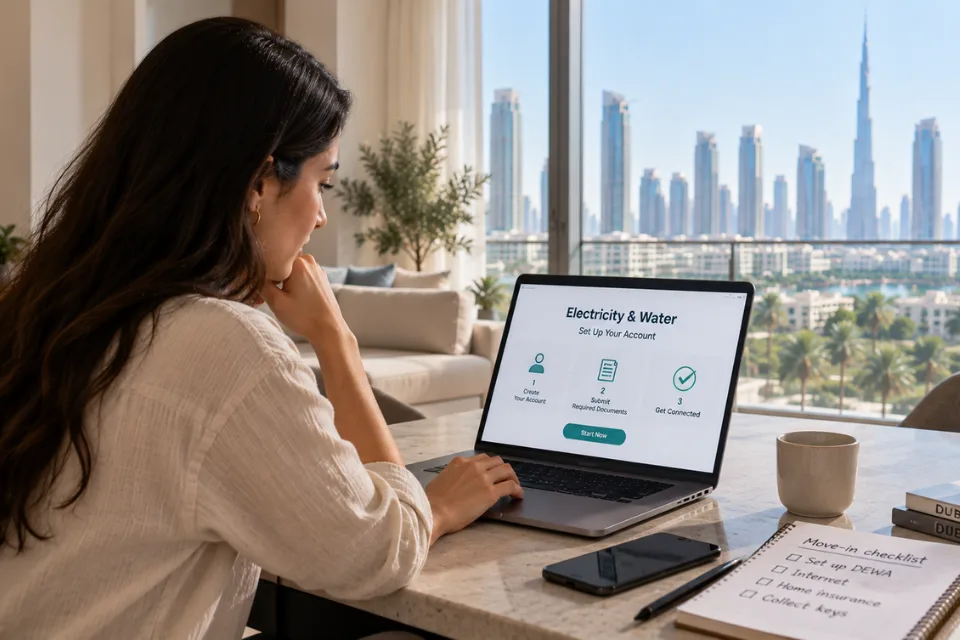
- Assuming the rental process is identical everywhere
- Budgeting only for rent and forgetting deposits, registration, and utility costs
- Signing a tenancy agreement without understanding payment schedules or maintenance responsibilities
- Choosing a city before considering commute times and lifestyle
- Failing to register the tenancy properly, which can create problems with utilities and legal protection
This guide explains how renting works across the UAE in 2026, the key differences between emirates, the costs you should plan for, and the practical steps that help make the rental process straightforward, whether you're moving to Dubai, Abu Dhabi, Sharjah, Ajman, Ras Al Khaimah, or another part of the country.
Who This Guide Is For
This guide is designed for:
- Expats relocating to the UAE
- UAE residents moving between emirates
- First-time tenants
- Professionals comparing Dubai, Abu Dhabi, Sharjah, Ajman, and other emirates
- Families planning a move
- Entrepreneurs, freelancers, and remote workers
If you've already decided which emirate you'll live in, a city-specific guide will provide more detailed advice. However, if you're still deciding where to move or want to understand how renting works across the UAE as a whole, this guide is the best place to start.
Quick Answer
Although every emirate has its own procedures, renting a property in the UAE generally follows these steps:
- Choose the right emirate and neighbourhood.
- Set a realistic housing budget.
- View and compare properties.
- Agree on the key rental terms.
- Prepare your documents.
- Sign the tenancy agreement.
- Register the lease through the appropriate tenancy registration system.
- Activate utilities and prepare for move-in.
The biggest differences between emirates relate to lease registration, utility activation, municipality fees, and some administrative procedures rather than the overall rental process itself.
Step 1: Choose the Right Emirate Before Choosing a Property
One of the biggest mistakes newcomers make is treating the UAE as one rental market.
In reality, each emirate offers a different lifestyle, housing market, and rental experience.
Your choice affects:
- Rental prices
- Property types
- Commute times
- School options
- Daily convenience
- Car dependency
- Lease registration procedures
- Utility setup
Rather than beginning with property listings, start by deciding which emirate best suits your work, lifestyle, and long-term plans.
Dubai
Dubai offers the widest variety of neighbourhoods, property types, and employment opportunities.
It's particularly popular with:
- Professionals
- Entrepreneurs
- International businesses
- Expats seeking an active urban lifestyle
Things to consider:
- Premium neighbourhoods can be expensive.
- Commute planning is important.
- Rental prices vary significantly between communities.
Abu Dhabi
Abu Dhabi is often chosen by renters looking for a calmer pace of life and well-established residential communities.
It's especially popular with:
- Families
- Long-term residents
- Professionals
- Government and corporate employees
Things to consider:
- Premium communities command higher rents.
- Many family neighbourhoods are easier to navigate with a car.
Sharjah
Sharjah attracts renters seeking more affordable housing while remaining close to Dubai.
It's a popular choice for:
- Families
- Budget-conscious professionals
- Daily commuters
Things to consider:
- Commuting into Dubai can significantly increase travel time.
Ajman
Ajman offers some of the UAE's most affordable rental options.
It's well suited to:
- Families
- Budget-conscious renters
- Residents working locally
Things to consider:
- Commute times should be considered carefully if you work in another emirate.
Ras Al Khaimah and the Northern Emirates
The Northern Emirates appeal to renters looking for:
- Lower housing costs
- A quieter lifestyle
- Remote working opportunities
- More living space
Things to consider:
- They may not be practical if your work or daily routine centres on Dubai or Abu Dhabi.
The best emirate isn't necessarily the most famous. It's the one that fits your daily routine, budget, and long-term lifestyle.
Step 2: Set a Realistic Housing Budget
Many renters focus only on the advertised annual rent.
In reality, your total housing cost is much higher.
Before viewing properties, budget for:
- Annual rent
- Security deposit
- Agency commission (if applicable)
- Lease registration costs
- Utility setup
- Internet installation
- Moving expenses
- Furniture or appliances if required
Looking at your complete housing budget from the start makes comparing properties much easier.
Common Upfront Costs
Most tenants should expect several upfront expenses before moving into a property.
Security Deposit
Across much of the UAE, a common guideline is:
- Around 5% of annual rent for unfurnished properties
- Around 10% of annual rent for furnished properties
Although these percentages are widely used, landlords may have different requirements depending on the property.
Agency Commission
If you rent through a broker or real estate agency, you'll usually pay a commission.
The exact amount varies between emirates, landlords, and property types, but agency fees are a normal part of many rental transactions.
Lease Registration Costs
Every emirate has its own tenancy registration system.
Registration fees and procedures vary, so it's important to understand how they apply to your chosen location.
Utility Deposits and Setup
Utility activation isn't always automatic.
Depending on the emirate and provider, you may need to:
- Complete lease registration first
- Pay utility deposits
- Submit supporting documentation
Planning for these costs helps avoid unexpected delays after signing your tenancy agreement.
Step 3: Understand Lease Registration
One of the biggest differences between emirates is how tenancy agreements are registered.
Signing a tenancy agreement is only one part of the process.
In most cases, the lease must also be officially registered with the relevant authority.
Registration helps:
- Formalise the tenancy agreement
- Support tenant and landlord rights
- Enable utility activation
- Create an official tenancy record
Dubai: Ejari
Dubai uses Ejari, which is administered through Dubai Land Department and RERA systems.
Registration is generally required before many services can be activated.
Abu Dhabi: Tawtheeq
Abu Dhabi uses Tawtheeq.
Unlike Dubai, Tawtheeq registration is commonly handled by the landlord or property management company rather than the tenant.
It is also closely linked to utility activation and municipality billing.
Ajman: Tasdeeq
Ajman uses Tasdeeq for tenancy registration, renewals, cancellations, and related services.
Other Emirates
Sharjah, Ras Al Khaimah, Fujairah, Umm Al Quwain, and the remaining emirates each operate their own municipal tenancy registration procedures.
Before signing a lease, always confirm:
- Who is responsible for registration
- When registration will be completed
- What fees apply
- Whether registration is required before utilities can be activated
Understanding these requirements early helps avoid unnecessary delays later.
Step 4: Prepare Your Documents
Although requirements vary between landlords and emirates, most tenants should prepare:
- Passport copy
- Emirates ID
- Valid residence visa or proof of residency
- Employment letter or proof of income
- Recent bank statements where requested
If you're self-employed or renting through a company, additional documents such as trade licences or company paperwork may also be required.
Having your documents ready before you begin viewing properties allows you to move quickly once you've found the right home.
Step 5: View Properties Properly
A property may look impressive online while hiding issues that only become obvious during a viewing.
Rather than focusing only on appearance, inspect:
- Building condition
- Parking
- Air conditioning
- Water pressure
- Natural light
- Noise levels
- Appliances
- Signs of damage or poor maintenance
- Security and access systems
If you're viewing a villa or townhouse, also check:
- Outdoor maintenance
- Garden responsibilities
- Pool maintenance (if applicable)
- Storage areas
- Privacy
- Road noise
Taking time during viewings often prevents costly surprises later.
Step 6: Agree on the Rental Terms
Before paying any money or signing a tenancy agreement, confirm every important detail.
Discuss:
- Annual rent
- Number of rent cheques
- Security deposit
- Agency commission
- Maintenance responsibilities
- Parking
- Utilities
- Move-in date
- Notice period
- Early termination conditions
- Furnished or unfurnished status
If special conditions such as pets, repainting, maintenance limits, or cleaning responsibilities have been agreed, ask for them to be included in writing.
Clear communication at this stage can prevent many common disputes later.
Step 7: Understand How Rent Payments Usually Work
In the UAE, rent is normally quoted as an annual amount, but how you pay that rent is often just as important as the total price.
Most landlords accept payment using post-dated cheques, although the number of cheques varies depending on the property, landlord, and emirate.
Common payment structures include:
- One cheque
- Two cheques
- Four cheques
- More flexible instalment plans in some cases
Why the Payment Structure Matters
Two properties with the same annual rent can have very different financial implications.
For example, paying the full rent in one cheque requires significantly more cash upfront than paying quarterly.
Some landlords may also offer more favourable rental rates to tenants willing to pay using fewer cheques, while greater payment flexibility can sometimes result in a slightly higher annual rent.
If your preferred payment schedule is important, discuss it before agreeing to the tenancy rather than afterwards.
Step 8: Sign the Tenancy Agreement Carefully
Once you've agreed on the rental terms, take time to review the tenancy agreement before signing.
A tenancy agreement is a legally binding contract, so it's important to understand every clause.
The agreement should clearly state:
- Landlord and tenant details
- Annual rent
- Payment schedule
- Security deposit
- Lease start and end dates
- Renewal terms
- Notice period
- Maintenance responsibilities
- Early termination conditions
- Furniture and appliances included
- Who is responsible for tenancy registration
If anything is unclear, ask for clarification before signing rather than relying on verbal assurances.
Step 9: Register the Lease and Activate Utilities
Once the tenancy agreement has been signed, the next step is ensuring the lease is properly registered and your utilities are activated.
In most emirates, tenancy registration is closely linked to:
- Utility activation
- Municipality billing
- Legal recognition of the tenancy
- Future dispute resolution
Before moving in, confirm:
- Who is responsible for registering the lease
- Whether utilities require separate activation
- Whether utility deposits apply
- Whether municipality or housing fees will appear on your bills
- How internet installation is arranged
Completing these steps before move-in helps avoid unnecessary delays.
Step 10: Understand the Key Differences Between Emirates
Although the overall rental process is similar across the UAE, each emirate has its own administrative procedures.
Understanding these differences makes the entire process much easier.
Renting in Dubai
Dubai is the UAE's largest rental market and offers the widest choice of communities and property types.
Key things to know:
- Tenancy agreements are registered through Ejari.
- Lease-related services are available through Dubai Land Department systems.
- Rental prices vary significantly between neighbourhoods.
- Payment schedules are often an important part of negotiations.
- Utility costs differ depending on the building and cooling system.
Dubai is particularly well suited to professionals, entrepreneurs, and renters seeking a fast-paced urban lifestyle.
Renting in Abu Dhabi
Abu Dhabi is often preferred by families and long-term residents seeking quieter residential communities.
Key things to know:
- Tenancy agreements are registered through Tawtheeq.
- Registration is often handled by the landlord or property manager.
- Tawtheeq is linked to utility activation and municipality billing.
- Many tenants should budget for municipality housing fees.
Abu Dhabi is especially popular with families, professionals, and long-term residents.
Renting in Ajman
Ajman has become an increasingly popular choice for renters seeking lower housing costs.
Key things to know:
- Tenancy agreements are registered through Tasdeeq.
- Tasdeeq handles lease registration, renewals, and cancellations.
- Rental prices are generally lower than in Dubai and Abu Dhabi.
- Commute times should be considered if you work elsewhere.
Renting in Sharjah and the Northern Emirates
Sharjah, Ras Al Khaimah, Fujairah, Umm Al Quwain, and the other northern emirates each operate their own tenancy registration procedures.
These emirates are often attractive because they offer:
- Lower rental prices
- Larger homes
- A slower pace of life
- Better value for money
However, if your work is based in Dubai or Abu Dhabi, commuting should be considered carefully before deciding where to live.
The most important point is simple:
Never assume the rental process in one emirate is identical to another.
Common Costs Many Tenants Forget
Many first-time renters budget only for annual rent.
In reality, several additional costs are common across the UAE.
These include:
- Security deposit
- Agency commission
- Lease registration fees
- Municipality or housing fees
- Utility setup and deposits
- Internet installation
- Moving costs
- Furniture and appliances if required
Planning for these expenses early helps avoid unexpected financial pressure during your move.
How to Choose the Right Emirate
If you haven't decided where to live yet, following a simple process makes the decision much easier.
Start With Your Daily Routine
Think about:
- Where you work
- School locations
- Airport access
- Whether you'll commute regularly
- Whether you work remotely
Your daily routine should influence your choice more than any individual property.
Decide What Type of Home You Need
Think about whether you're looking for:
- Studio apartment
- Apartment
- Townhouse
- Villa
Your preferred property type immediately narrows your shortlist.
Be Realistic About Commuting
Lower rent isn't always better value if it comes with a long daily commute.
Consider:
- Travel time
- Fuel costs
- Parking
- Public transport options
A slightly more expensive property closer to work may reduce your overall monthly costs.
Compare Total Housing Costs
Rather than comparing rent alone, compare:
- Annual rent
- Security deposit
- Registration fees
- Utilities
- Municipality fees
- Transport costs
This gives a much more realistic picture of affordability.
Common Mistakes Expats Make
Many renters make similar mistakes when moving to the UAE.
Some of the most common include:
- Choosing a property before choosing the right emirate
- Budgeting only for annual rent
- Not understanding the tenancy registration system
- Overlooking municipality and utility costs
- Ignoring payment structures
- Signing without understanding maintenance responsibilities
- Choosing the cheapest area without considering daily life
Avoiding these mistakes usually leads to a much smoother rental experience.
UAE Renting Checklist
Before Viewing Properties
- Choose the right emirate.
- Shortlist suitable neighbourhoods.
- Set a realistic housing budget.
- Decide on your preferred property type.
Before Agreeing to Rent
- Inspect the property carefully.
- Confirm rent, payment schedule, and fees.
- Clarify maintenance responsibilities.
- Confirm who will register the tenancy.
Before Signing
- Prepare your documents.
- Read the tenancy agreement carefully.
- Review renewal and notice periods.
- Understand early termination conditions.
After Signing
- Confirm the lease has been registered.
- Arrange utility activation.
- Organise internet installation.
- Complete a move-in inspection.
- Keep copies of all contracts and payment records.
Frequently Asked Questions
Can expats rent property anywhere in the UAE?
Yes. Expats can rent residential property throughout the UAE, although ownership rules differ between emirates and freehold areas.
Is tenancy registration mandatory?
For most residential rentals, tenancy registration is an important part of the legal rental process. The system varies by emirate, with Dubai using Ejari, Abu Dhabi using Tawtheeq, and Ajman using Tasdeeq.
What is the usual security deposit?
A common guideline is around 5% of annual rent for unfurnished properties and 10% for furnished properties, although landlords may have different requirements.
Who registers the tenancy in Abu Dhabi?
In many cases, the landlord or property management company handles Tawtheeq registration rather than the tenant.
What is Tasdeeq?
Tasdeeq is Ajman's official tenancy registration system, used for registering, renewing, and managing tenancy agreements.
Are utilities included in the rent?
Usually not. Unless your tenancy agreement specifically states otherwise, you should expect electricity, water, internet, cooling, and other utility costs to be charged separately.
Which emirate is best for renting?
There isn't a single best choice for everyone.
- Dubai suits many professionals and entrepreneurs.
- Abu Dhabi is often preferred by families and long-term residents.
- Sharjah and Ajman are popular with renters seeking lower housing costs.
The right choice depends on your work, budget, commute, and preferred lifestyle.
Final Thoughts
Renting in the UAE becomes much simpler once you understand that each emirate has its own procedures.
Instead of treating the country as one rental market, start by choosing the emirate that best suits your lifestyle, then shortlist the right neighbourhoods, budget for the full cost of renting, understand the local tenancy registration system, and review your tenancy agreement carefully before signing.
Following these steps will help you avoid many of the common mistakes made by first-time tenants and make your move to the UAE far more straightforward.
Ready to find your next home? Explore apartments, townhouses, and villas on HopInHome and discover rental opportunities across Dubai, Abu Dhabi, Sharjah, Ajman, Ras Al Khaimah, and the rest of the UAE.
Sources
- UAE Government Portal, Leasing a Property in the UAE
- Dubai Land Department (DLD)
- Real Estate Regulatory Agency (RERA), Dubai
- Department of Municipalities and Transport, Abu Dhabi (Tawtheeq)
- Abu Dhabi Distribution Company (Understanding Tawtheeq)
- Ajman Municipality, Tasdeeq
- Dubai Electricity and Water Authority (DEWA)
- Abu Dhabi Distribution Company (ADDC)
- Etihad Water and Electricity (EtihadWE)

Find a rental home
you can feel safe about
Explore rentals with ratings from people who have lived there.
Explore properties