Rental Deposits and Fees in Dubai in 2026 | Tenant Cost Guide

Many first-time renters in Dubai focus almost entirely on the annual rent.
Then they find a property they love and suddenly discover they need several thousand dirhams in additional upfront costs before they can collect the keys and move in.
The reality is that renting a property in Dubai involves far more than simply paying rent. Depending on the property, community, and rental arrangement, tenants may need to budget for security deposits, agency fees, utility deposits, government registration fees, moving expenses, and ongoing monthly charges.
Understanding these costs before you begin your property search can help you set a realistic budget, avoid unexpected expenses, and compare rental properties more accurately.
This guide explains the most common rental deposits and fees in Dubai, what each one covers, which costs are refundable, and what you should expect before signing a tenancy agreement.
If you're renting for the first time, our complete guide to renting in Dubai walks you through every step of the rental process.
Who This Guide Is For
Whether you're renting your first apartment or relocating to a larger home, understanding the true cost of renting is essential.
This guide is designed for:
- First-time Dubai renters
- Expats relocating to the UAE
- Existing UAE residents moving home
- Freelancers and remote workers
- Business owners and entrepreneurs
- Families relocating to Dubai
Whether you're renting a studio apartment, townhouse, or luxury villa, these additional costs should be factored into your moving budget.
Quick Answer
In addition to your annual rent, most tenants should budget for:
- Security deposit (typically 5% to 10% of annual rent)
- Real estate agency commission (typically around 5% of annual rent)
- Ejari registration fee
- DEWA security deposit
- Utility connection fees
- Dubai Municipality housing fee
- Possible cooling or chiller charges
- Internet installation
- Moving expenses
Many tenants underestimate these additional costs when calculating how much money they'll need before moving into a new property.
Why Understanding Rental Costs Matters
The advertised annual rent is only part of the overall cost of renting a home in Dubai.
Some fees are one-time payments, others are refundable deposits, while certain charges continue throughout your tenancy as part of your monthly living expenses.
Understanding the difference allows you to budget more accurately and prevents unexpected financial surprises after signing your tenancy agreement.
It also makes comparing rental properties much easier, as two apartments with the same annual rent may have very different overall costs depending on the building, included utilities, and payment structure.
The Security Deposit
The security deposit is usually one of the largest upfront costs when renting a property in Dubai.
Its purpose is to protect the landlord against financial loss if the property is damaged beyond normal wear and tear, utility bills remain unpaid, or the tenant breaches the tenancy agreement.
Most landlords collect the deposit before handing over the keys.
Typical Security Deposit Amounts
Unfurnished Property
Approximately 5% of the annual rent
Furnished Property
Approximately 10% of the annual rent
While these percentages are considered standard across much of Dubai's rental market, individual landlords may occasionally request different amounts depending on the property.
Is the Security Deposit Refundable?
In most cases, yes.
Provided that:
- The property is returned in good condition
- Utility bills have been settled
- There is no significant damage beyond normal wear and tear
- The tenancy agreement has been fulfilled
the landlord should return the security deposit once the tenancy has ended.
If deductions are made, they should generally relate to documented damage, unpaid bills, or outstanding contractual obligations.
How to Protect Your Deposit
A little preparation can greatly reduce the chances of disputes when moving out.
Before Moving In
- Take photographs of every room
- Record any existing damage
- Request a move-in inspection
- Keep copies of all written communication
Before Moving Out
- Repair any tenant-caused damage
- Settle outstanding utility bills
- Attend the final property inspection
- Keep proof of payments where applicable
These simple steps can make it much easier to recover your full deposit.
Before paying any deposits or fees, make sure you have all the documents needed to rent in Dubai prepared.
Real Estate Agency Fees
If you rent through a licensed real estate broker or agency, you'll usually pay a commission for their services.
This fee covers assistance with finding the property, arranging viewings, negotiating terms, preparing paperwork, and coordinating the rental process between the landlord and tenant.
Typical Agency Commission
For most residential properties, agency commission is typically around:
5% of the annual rent
Some agencies charge a minimum fixed fee instead, particularly for lower-priced properties.
Is the Agency Fee Refundable?
No.
Agency commission is payment for professional services already provided during the rental transaction and is generally non-refundable once the tenancy has been agreed.
Can Agency Fees Be Negotiated?
Sometimes.
Although many agencies charge standard market rates, there may be room for negotiation depending on the property, landlord, rental value, or current market conditions.
It never hurts to ask politely before signing any agreements.
Ejari Registration Fees
Ejari is Dubai's official tenancy registration system.
Registering your tenancy agreement provides legal recognition of the rental contract and is required for many essential services, including activating utilities and accessing certain government services.
Typical Ejari Cost
Registration generally costs around:
AED 120 to AED 235
The exact amount depends on how the registration is completed and which authorised service centre processes the application.
Is Ejari Mandatory?
For most long-term residential rentals, yes.
Without an active Ejari registration, tenants may experience difficulties connecting utilities, sponsoring family members, or accessing certain government services linked to their residential address.
For this reason, Ejari registration should be considered an essential part of the rental process rather than an optional expense.
DEWA Deposits and Connection Fees
The Dubai Electricity and Water Authority (DEWA) supplies electricity and water to most residential properties in Dubai.
Before your utilities can be activated, you'll usually need to pay a refundable security deposit along with a small connection fee.
Typical DEWA Deposits
Apartment
AED 2,000
Villa
AED 4,000
These deposits are generally refundable when your DEWA account is closed and any outstanding bills have been settled.
DEWA Connection Fees
In addition to the refundable deposit, DEWA charges administrative fees to activate your account.
Although these charges are relatively small compared to the deposit itself, they should still be included in your overall moving budget.
Dubai Municipality Housing Fee
Many people moving to Dubai are surprised to see an additional charge appear on their monthly DEWA bill after moving into a rental property.
This is known as the Dubai Municipality Housing Fee, and it's an important ongoing cost that should be included in your rental budget.
Unlike the security deposit or DEWA deposit, this fee is not refundable and continues for as long as you occupy the property.
What Is the Housing Fee?
The Dubai Municipality Housing Fee is typically calculated as:
5% of your annual rent
The fee helps fund municipal services and infrastructure throughout Dubai.
How Is It Paid?
Rather than being collected as a single payment, the housing fee is divided into monthly instalments and added directly to your DEWA bill.
For example:
Annual Rent: AED 100,000
Annual Housing Fee: AED 5,000
Monthly Housing Fee: Approximately AED 417
Many first-time renters overlook this ongoing expense when calculating their monthly housing costs, so it's worth factoring it into your budget from the beginning.
Cooling and Chiller Charges
Air conditioning is an essential part of everyday life in Dubai, but not every building handles cooling costs in the same way.
Understanding how your building manages air conditioning can make a noticeable difference to your monthly expenses.
Chiller-Free Buildings
Some residential buildings include cooling costs within the annual rent.
These are often referred to as chiller-free properties, meaning tenants do not receive a separate cooling bill.
District Cooling Buildings
Other buildings use district cooling providers, where air conditioning is billed separately.
The amount you pay depends on several factors, including:
- Apartment size
- Building type
- Cooling provider
- Seasonal usage
- Individual consumption
Before signing a tenancy agreement, always ask whether cooling charges are included in the rent or billed separately.
Moving Costs
While moving expenses are not part of the tenancy agreement itself, they can represent a significant portion of your overall moving budget.
The total cost depends on the size of your home, the amount of furniture you own, and whether you're relocating within Dubai or moving from overseas.
Potential moving expenses include:
- Professional movers
- Furniture purchases
- Household appliances
- Cleaning services
- Temporary storage
- Parking permits
- Packing materials
For some tenants, moving costs may only amount to a few hundred dirhams, while larger household moves can cost several thousand.
Internet and Telecom Setup
After moving into your new home, you'll also need to arrange internet and telecommunications services.
Depending on your provider and package, you may need to budget for:
- Internet installation
- Router or equipment charges
- Television services
- Mobile plans
- Monthly subscriptions
Some providers occasionally offer promotional installation packages, while others may charge setup fees for new connections.
How Much Should You Budget Before Moving In?
One of the biggest mistakes first-time renters make is budgeting only for the first rent payment.
In reality, you'll usually need enough funds to cover several additional costs before receiving the keys to your new home.
As a general rule, many tenants should budget for:
- Security deposit
- Agency commission
- Ejari registration
- DEWA deposit
- Utility connection fees
- Initial moving costs
- Internet installation
- Basic household essentials if the property is unfurnished
Planning for these expenses in advance can make your move significantly less stressful and reduce the likelihood of unexpected financial pressure.
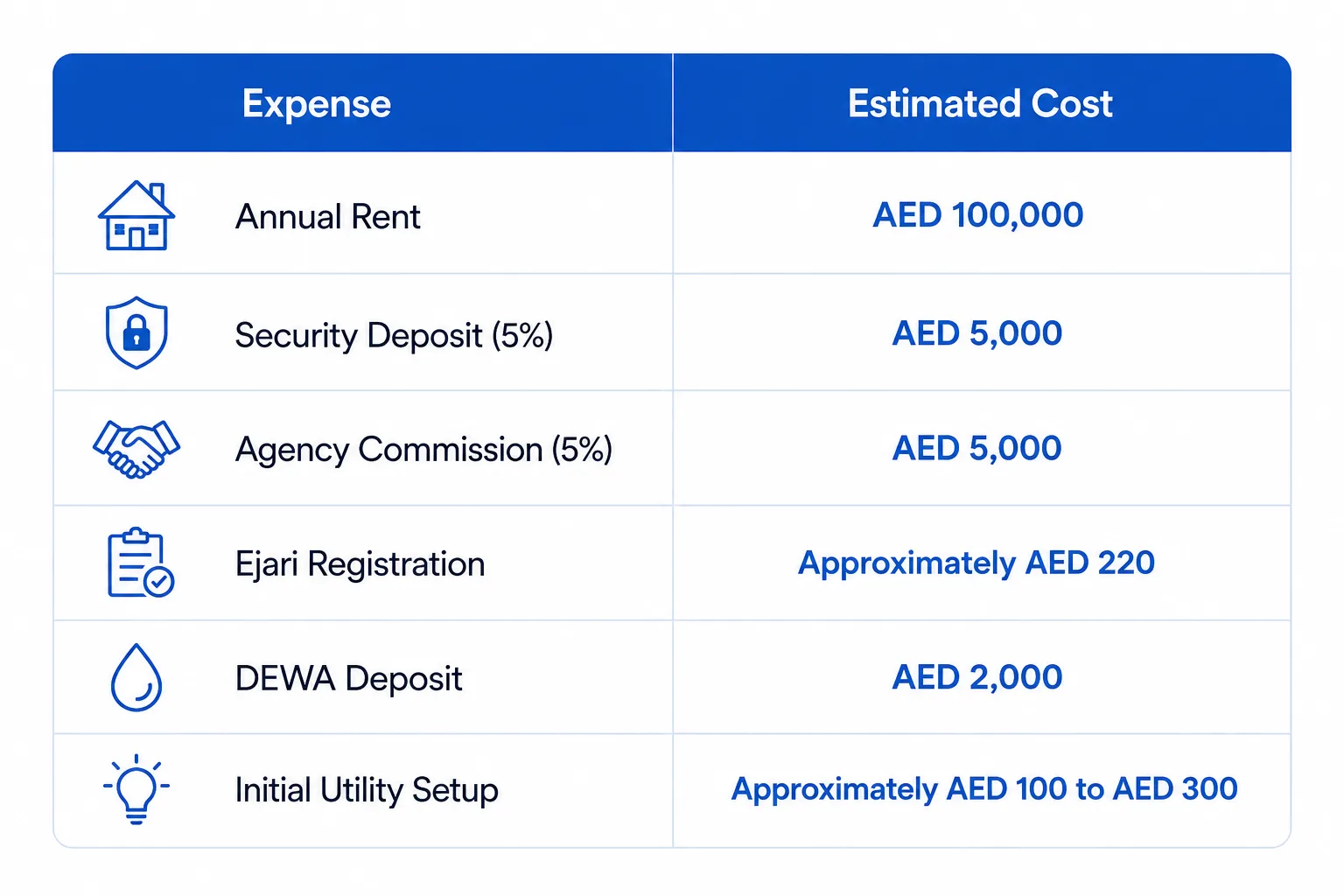
Example Upfront Cost Breakdown
Let's assume you're renting an unfurnished apartment with an annual rent of AED 100,000.
Hidden Costs Many Tenants Forget
Some of the easiest expenses to overlook are the smaller charges that aren't always discussed during property viewings.
Commonly forgotten costs include:
- Dubai Municipality housing fee
- Cooling or chiller charges
- Internet installation
- Moving expenses
- Parking fees
- Furniture and appliances
- Cleaning services
- Minor maintenance items
Although each individual expense may seem relatively small, together they can have a noticeable impact on your moving budget.
Questions to Ask Before Signing a Lease
Before committing to any rental property, it's worth asking a few important questions.
These can help you understand the full cost of renting and avoid unexpected surprises later.
Ask Your Landlord or Agent
- Is the property furnished or unfurnished?
- What is the security deposit?
- Are cooling charges included in the rent?
- How many rent cheques are required?
- Are there any additional administration fees?
- Which utilities are included?
- Who is responsible for maintenance?
- What conditions must be met to receive the security deposit back?
Taking a few minutes to clarify these details can prevent misunderstandings once the tenancy begins.
Frequently Asked Questions
How much is a rental deposit in Dubai?
Most landlords request approximately 5% of the annual rent for unfurnished properties and around 10% for furnished properties.
Is the security deposit refundable?
In most cases, yes. The deposit is generally returned at the end of the tenancy provided the property is returned in good condition and all contractual obligations have been met.
How much is the agency commission?
Residential agency commissions are typically around 5% of the annual rent, although minimum fees or negotiated rates may sometimes apply.
What is the Dubai Municipality Housing Fee?
The housing fee is typically 5% of your annual rent and is collected through monthly DEWA bills. Unlike the security deposit, it is not refundable.
Do I need to pay for Ejari registration?
Yes. For most long-term residential rentals, Ejari registration is required and forms an important part of the legal tenancy process.
Final Thoughts
The annual rent is only one part of the overall cost of renting a property in Dubai.
Before moving into your new home, you'll also need to budget for security deposits, agency commissions, Ejari registration, DEWA deposits, utility setup fees, housing charges, and potentially cooling costs, internet installation, and moving expenses.
Understanding these costs before you begin your property search allows you to compare properties more accurately, avoid unexpected expenses, and plan your finances with greater confidence.
The more informed you are before signing a tenancy agreement, the smoother your move is likely to be.
Ready to find your next home in Dubai? Browse apartments, villas, and townhouses on HopInHome and explore rental listings across Dubai's most popular communities.
Sources

Find a rental home
you can feel safe about
Explore rentals with ratings from people who have lived there.
Explore properties