Moving to Dubai in 2026 | Expat Relocation Guide


Moving to Dubai is an exciting opportunity, whether you're relocating for a new job, launching a business, working remotely, or starting a new chapter with your family. The city offers world-class infrastructure, a strong job market, excellent healthcare, and a lifestyle that attracts people from around the globe.
At the same time, relocating to a new country can feel overwhelming. There are visas to arrange, neighbourhoods to compare, rental costs to budget for, documents to prepare, and utilities to set up. Trying to tackle everything at once often leads to unnecessary stress.
The good news is that moving to Dubai becomes much more manageable when you break the process into clear, practical steps.
This guide walks you through the entire relocation journey, from planning before you leave your home country to settling into your new neighbourhood. Along the way, you'll learn how to budget for the move, choose the right area, prepare your rental documents, avoid common mistakes, and make your transition as smooth as possible.
Who This Dubai Relocation Guide Is For
This guide is designed for:
- Expats moving to Dubai for the first time
- Professionals relocating for work
- Freelancers and remote workers
- Business owners and entrepreneurs
- Families moving to Dubai with children
- UAE residents relocating to Dubai from another emirate
Although the exact process varies depending on your visa type and personal circumstances, the steps below cover everything most people need to consider before and after relocating.
Once you've decided to relocate, our complete guide to renting in Dubai explains everything you need to know about finding and securing a home.
Quick Relocation Checklist
Before moving to Dubai, make sure you've covered these essentials:
- Confirm your visa or residency pathway
- Build a realistic relocation budget
- Research the best neighbourhoods for your lifestyle
- Decide whether you'll need temporary accommodation
- Prepare your rental documents
- Organise important personal paperwork
- Plan how you'll access money during your first few weeks
- Decide what to bring, ship, or purchase after arrival
Once you're in Dubai:
- Get a local SIM card
- Explore neighbourhoods in person
- View rental properties
- Secure long-term accommodation
- Register Ejari
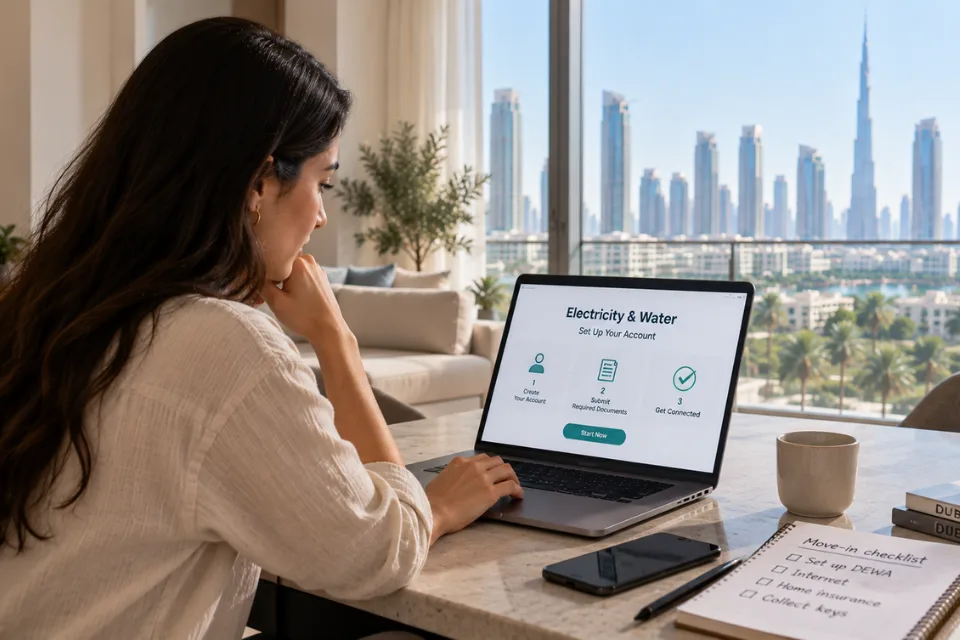
- Set up utilities
- Open your UAE bank account
- Settle into your new community
Why Expats Move to Dubai
Dubai attracts professionals, entrepreneurs, and families from around the world for a variety of reasons.
Career Opportunities
Dubai remains a major international hub for finance, technology, healthcare, hospitality, logistics, aviation, construction, and real estate.
Many professionals relocate for higher salaries, greater career opportunities, or the chance to work in an international business environment.
Tax Advantages
For many expats and business owners, Dubai's tax environment is one of its biggest attractions.
Depending on your personal circumstances and tax residency, the absence of personal income tax can significantly improve long-term savings and financial planning.
Lifestyle and Infrastructure
Dubai combines modern infrastructure with a high standard of living.
Residents benefit from excellent roads, reliable public transport, international schools, high-quality healthcare, modern residential communities, and year-round entertainment.
Global Connectivity
Dubai's location makes it an ideal base for international travel.
With direct flights to hundreds of destinations across Europe, Asia, Africa, and beyond, it's particularly attractive for frequent travellers, remote workers, and international business owners.
What to Know Before Moving to Dubai
Before planning your relocation, it's worth understanding a few important realities about living in Dubai.
Dubai Can Suit Many Different Budgets
Dubai has a reputation for luxury, but it also offers a wide range of affordable housing and lifestyle options.
Someone renting a studio apartment in a value-focused community and using public transport will have a very different monthly budget from someone living in a luxury apartment in Downtown Dubai and dining out every evening.
Before making the move, it's important to understand the cost of living in Dubai so you can plan your monthly budget.
Housing Is Usually Your Largest Expense
For most expats, accommodation represents the biggest monthly cost.
In addition to annual rent, you'll usually need to budget for:
- Security deposit
- Agency commission
- Ejari registration
- DEWA deposit
- Utility setup
- Internet installation
- Moving expenses
Planning for these upfront costs helps avoid unexpected financial pressure after arriving.
Choosing the Right Area Matters
Where you live affects far more than your rent.
Your neighbourhood influences:
- Daily commute
- Transport costs
- Access to schools
- Lifestyle
- Walkability
- Restaurants and cafés
- Shopping
- Overall quality of life
Choosing the right neighborhood is one of the biggest decisions, so explore the best areas to live in Dubai before you start your property search.
You Don't Need Everything Planned Before You Arrive
Many people assume they need to secure long-term accommodation before flying to Dubai.
In reality, many expats choose temporary accommodation first, allowing them to explore different neighbourhoods and view properties in person before committing to a lease.
Taking a little extra time at the beginning can help you avoid choosing the wrong home.
Dubai Relocation Timeline
Breaking your move into smaller stages makes the process much easier to manage.
Before You Move
Focus on:
- Visa planning
- Budgeting
- Researching neighbourhoods
- Preparing documents
- Organising finances
- Booking temporary accommodation if needed
Your First Week in Dubai
Prioritise:
- Getting a local SIM card
- Exploring neighbourhoods
- Viewing rental properties
- Organising transport
- Beginning residency formalities
Your First Month
This is when you'll usually:
- Secure long-term accommodation
- Sign your tenancy agreement
- Register Ejari
- Set up DEWA and utilities
- Open a local bank account
- Establish your daily routine
Your First 30 to 90 Days
Once you've settled into your home, focus on:
- Refining your monthly budget
- Learning your local area
- Completing remaining administrative tasks
- Building your new routine
- Exploring the city
Step 1: Understand Your Visa and Residency Path
Before booking a one-way flight, make sure you understand exactly how you'll be living in Dubai legally.
Some of the most common residency routes include:
- Employer-sponsored work visa
- Freelance visa
- Business owner or investor visa
- Remote work visa
- Family sponsorship
- Long-term residency options
Before relocating, ask yourself:
- Who is sponsoring your visa?
- Which documents do you need before arrival?
- Which steps happen after arrival?
- How long will the residency process take?
- Will you be able to rent immediately, or will you need temporary accommodation first?
If you're relocating through an employer, request a detailed relocation timeline so you understand which parts they'll handle and which remain your responsibility.
Step 2: Build a Realistic Cost of Living Budget
One of the biggest mistakes expats make is focusing only on salary and monthly rent.
Before relocating, estimate the full cost of your move, including:
- Temporary accommodation
- Security deposit
- Agency commission
- Ejari registration
- DEWA deposit
- Internet and mobile setup
- Groceries
- Transport
- Health insurance (if required)
- School fees (if applicable)
- Emergency savings for your first few months
It's helpful to separate these into two categories.
Upfront Relocation Costs
These are the expenses you'll usually pay before or shortly after moving.
Examples include:
- Flights
- Temporary accommodation
- Security deposit
- Agency commission
- Shipping costs
- Furniture
- Visa expenses not covered by your employer
Ongoing Monthly Costs
These include your regular living expenses such as:
- Rent
- Utilities
- Groceries
- Transport
- Insurance
- Entertainment
- Gym memberships
- School fees
Creating a realistic budget before relocating makes it much easier to plan your finances confidently.
Step 3: Decide Where to Live in Dubai
Rather than starting your property search by scrolling through listings, begin by thinking about the lifestyle you want.
Ask yourself:
- Do I want to live close to work?
- Is walkability important?
- Do I want cafés, restaurants, and nightlife nearby?
- Do I need to be close to schools?
- Am I prioritising affordability or convenience?
- Do I want an apartment, townhouse, or villa?
- Will I own a car or rely on public transport?
As a starting point:
Popular Areas for Professionals
- Dubai Marina
- Business Bay
- Downtown Dubai
- Jumeirah Lake Towers (JLT)
Popular Areas for Families
- Dubai Hills Estate
- Arabian Ranches
- Jumeirah Park
- Town Square Dubai
Popular Value-for-Money Areas
- Jumeirah Village Circle (JVC)
- Dubai Silicon Oasis
- Discovery Gardens
- Dubai South
Choosing the right community before you begin viewing properties helps narrow your search and saves valuable time.
Step 4: Decide Whether You Need Temporary Accommodation
Not everyone should sign a long-term tenancy agreement immediately after arriving in Dubai.
Temporary accommodation often makes sense if:
- Your Emirates ID is still being processed.
- You want to explore neighbourhoods before choosing where to live.
- You're relocating with your family and need time to compare schools.
- Your employer only provides short-term accommodation.
- You want to avoid rushing into a long-term lease.
Popular options include:
- Hotel apartments
- Serviced apartments
- Short-term furnished rentals
- Holiday rentals where appropriate
Although temporary accommodation can cost more in the short term, it often helps people make much better long-term housing decisions.
Step 5: Prepare Your Rental Documents Before You Need Them
Once you begin viewing properties, desirable rentals can be taken quickly.
Preparing your documents before you arrive allows you to move much faster when you find the right home.
Most landlords commonly request:
- Passport copy
- Emirates ID (once issued)
- UAE residence visa (once issued)
- Employment letter or offer letter
- Salary certificate
- Bank statements
- Trade licence or business documentation (if self-employed)
- Contact information
- Funds for the security deposit
Even if you don't yet have every document, organising what you already have before travelling will make the rental process much smoother.
Step 6: Organise Your Important Documents
Before travelling, make sure all of your important documents are organised and easily accessible.
Keeping both digital and physical copies can save a great deal of time if something is requested during your relocation.
Documents worth preparing include:
- Passport
- Visa paperwork
- Birth certificates
- Marriage certificate (if applicable)
- Degree certificates (if required for your visa)
- Employment contract or offer letter
- Medical records (if relevant)
- Vaccination records (particularly if moving with children)
- Driver's licence
- Insurance documents
- Recent bank statements
Storing copies securely in cloud storage as well as on your phone or laptop makes it much easier to access them when needed.
Step 7: Plan How You'll Access Money During Your First Weeks
Before moving, make sure you'll be able to access enough money to cover your initial expenses.
Questions worth considering include:
- Will your current bank card work in the UAE?
- Do you need to notify your bank before travelling?
- How will you transfer money internationally?
- Do you have an emergency cash buffer?
- When will your first salary be paid?
- When will you be able to open a UAE bank account?
Having a clear financial plan helps reduce stress during your first few weeks while you're settling into your new home.
Step 8: Decide What to Bring, Ship, or Buy Later
Not everything is worth shipping internationally.
Before packing, divide your belongings into three categories.
Bring With You
These are the items you'll want immediately after arrival, including:
- Important documents
- Electronics
- Essential clothing
- Prescription medication
- Sentimental items
- Anything expensive or difficult to replace
Ship Later or Store
Some belongings only make sense to ship if you're planning a long-term move.
These might include furniture, household items, or personal possessions that would be costly to replace.
Buy After You Arrive
Many everyday household items are easier to purchase once you've secured your permanent accommodation.
This is especially true if you're renting an unfurnished apartment or villa.
Your First Week in Dubai
Get a Local SIM Card
One of the first things you should do after arriving is obtain a local mobile number.
You'll need it for:
- Property viewings
- Communication with agents
- Banking
- Utility setup
- Deliveries
- Government services
- Everyday communication
Having a local number makes almost every other administrative task easier.
Organise Your Transport
Dubai offers several transport options, and your choice will largely depend on where you live.
Ask yourself:
- Will taxis be enough initially?
- Is public transport practical from your temporary accommodation?
- Should you rent a car?
- Will your long-term neighbourhood require car ownership?
Some communities are highly walkable and well connected by Metro, while others are much easier to navigate with your own vehicle.
Visit Neighbourhoods in Person
If you haven't already decided where to live, spend time exploring different communities before signing a lease.
Listing photos rarely tell the full story.
Pay attention to:
- Commute times
- Building quality
- Parking availability
- Walkability
- Nearby supermarkets
- Cafés and restaurants
- Noise levels
- Overall atmosphere
- Distance to work or school
A neighbourhood that looks perfect online may feel completely different once you're there.
Narrow Down Your Property Search
After exploring several communities, reduce your options to a shortlist.
Decide on:
- Your maximum budget
- Preferred property type
- Furnished or unfurnished
- Must-have amenities
- Preferred communities
Being selective saves time and helps you focus on properties that genuinely suit your lifestyle.
Keep Your Residency Process Moving
If your residency process hasn't yet been completed, make sure you know exactly which steps remain.
Understand:
- Whether medical testing is required
- When your Emirates ID will be issued
- Which appointments are still outstanding
- Whether additional documents are required
Your residency status affects many aspects of life in Dubai, including renting property, opening bank accounts, and activating utilities.
Finding and Renting a Property
Confirm the Full Cost Before Agreeing
Don't focus solely on the annual rent.
Request a complete breakdown of all costs, including:
- Security deposit
- Agency commission
- Ejari registration
- DEWA deposit
- Cooling charges (if applicable)
- Number of rent cheques
- Administrative fees
- Parking charges
- Maintenance responsibilities
Understanding the complete financial picture helps you avoid unexpected expenses later.
Verify Exactly What's Included
Before signing your tenancy agreement, clarify:
- Is the property furnished or unfurnished?
- Which appliances are included?
- Is the building chiller-free?
- Who is responsible for maintenance?
- Is parking included?
- Are pets permitted?
- What condition will the property be handed over in?
Never rely solely on the property listing.
Review the Tenancy Agreement Carefully
Before signing, make sure you understand every important term.
Pay particular attention to:
- Annual rent
- Payment schedule
- Contract length
- Renewal conditions
- Notice periods
- Maintenance obligations
- Deposit conditions
- Any special clauses
If anything seems unclear, ask for clarification before signing.
Register Ejari and Set Up Utilities
Once your tenancy agreement has been signed, the next steps usually include:
- Ejari registration
- DEWA activation
- Internet setup
- Cooling provider registration (where applicable)
- Building access cards
- Parking access
Completing these tasks promptly helps ensure your move goes smoothly.
Complete a Thorough Move-In Inspection
Before unpacking, inspect the property carefully.
Take photographs of:
- Every room
- Existing damage
- Walls and flooring
- Appliances
- Bathrooms
- Balconies
Also:
- Test the air conditioning
- Check water pressure
- Confirm all keys and access cards work
Recording the property's condition now can help protect your security deposit when you eventually move out.
Your First Month in Dubai
Set Up Your Financial Routine
Now that you're settled, organise your finances.
This may include:
- Opening your UAE bank account
- Tracking rent payment dates
- Setting reminders for utility bills
- Reviewing your monthly spending
- Adjusting your budget based on actual expenses
Good financial habits early on make life much easier later.
Get to Know Your Neighbourhood
Spend time exploring beyond your apartment building.
Find your nearest:
- Supermarket
- Pharmacy
- Medical clinic
- Gym
- Coffee shop
- Public transport
- Parking
- Restaurants
Learning your local area helps Dubai feel like home much more quickly.
Finalise Your Healthcare Arrangements
If your employer provides health insurance, make sure you understand:
- Which hospitals are covered
- Which clinics you can use
- Whether referrals are required
- Emergency procedures
If you're self-employed or using another visa route, arranging suitable health insurance should be a priority.
Test Your Daily Routine
If you're relocating with children, use your first few weeks to see how daily life actually works.
Consider:
- School run timings
- Commute times
- After-school activities
- Weekend routines
- Alternative transport options
The best family neighbourhood isn't simply the nicest house. It's the one that supports your everyday lifestyle.
Review and Adjust Your Plans
Almost every expat arrives with certain expectations about living in Dubai.
After your first month, you'll have a much clearer understanding of your actual spending, commute, and daily routine.
You might discover that:
- Your transport costs are higher than expected.
- Your commute is shorter than anticipated.
- Your neighbourhood suits you perfectly.
- You'd prefer a more central location in the future.
- Buying a car makes more sense than relying on taxis.
Treat your first month as a learning period rather than expecting every decision to be perfect immediately.
Common Mistakes Expats Make
Many relocation challenges can be avoided with a little preparation.
Some of the most common mistakes include:
- Signing a tenancy agreement too quickly
- Underestimating upfront rental costs
- Choosing a neighbourhood without considering commuting time
- Waiting too long to prepare rental documents
- Assuming every community offers the same lifestyle and amenities
Taking your time during the planning stage often leads to a much smoother relocation.
Complete Moving to Dubai Checklist
Before You Move
- Confirm your visa pathway
- Build a relocation budget
- Research neighbourhoods
- Prepare rental documents
- Decide on temporary accommodation
- Organise important paperwork
- Plan banking and money access
- Decide what to bring or ship
Your First Week
- Get a local SIM card
- Organise transport
- Visit neighbourhoods
- View rental properties
- Continue your residency process
After Finding a Property
- Confirm all rental costs
- Verify what's included
- Review the tenancy agreement
- Register Ejari
- Activate DEWA
- Arrange internet and cooling
- Complete a move-in inspection
Your First Month
- Set up your banking routine
- Learn your neighbourhood
- Finalise healthcare
- Establish your daily routine
- Review your monthly budget
Frequently Asked Questions
How much money should I save before moving to Dubai?
The amount depends on your lifestyle and accommodation choices, but you should budget for more than just rent. Security deposits, agency fees, temporary accommodation, utility deposits, transport, and an emergency fund should all be included in your planning.
Should I rent a property before arriving?
Many expats prefer to stay in temporary accommodation first so they can explore neighbourhoods and view properties in person before committing to a long-term lease.
What is usually the biggest moving expense?
For most people, housing represents the largest upfront cost once rent, deposits, agency fees, and utility setup are combined.
Is Dubai easy to move to as an expat?
Yes. With good planning and realistic budgeting, relocating to Dubai is generally straightforward. Most difficulties arise when people rush important decisions or underestimate moving costs.
Can freelancers and business owners move to Dubai?
Yes. Dubai offers several residency pathways for freelancers, entrepreneurs, and business owners. The main differences usually relate to visa requirements and the documentation needed when renting a property.
Final Thoughts
Moving to Dubai is much easier when you approach it as a series of manageable steps rather than one overwhelming project.
Understanding your visa pathway, choosing the right neighbourhood, preparing your rental documents early, and budgeting for both upfront and ongoing costs will help you avoid many of the challenges that first-time expats face.
With the right preparation, you'll be able to focus less on paperwork and logistics and more on settling into your new home and enjoying everything Dubai has to offer.
Ready to start your search? Explore apartments, townhouses, and villas on HopInHome and discover rental opportunities across Dubai's most popular communities.
Sources

Find a rental home
you can feel safe about
Explore rentals with ratings from people who have lived there.
Explore properties